 Exclusive Global Advisory
PRACTICAL SME GUIDE
Monthly bookkeeping checklist for Malaysian SMEs
A useful monthly bookkeeping pack lets someone trace a transaction from the record to the payment and understand what it was for. Start with one reporting month, collect the source documents, and keep a short list of anything missing or unclear.
This checklist helps you prepare that handover before your records are reviewed.
What to collect each month
Bank and payment accounts
Prepare: Statements and transaction exports for the business accounts and payment platforms used in the month.
Flag: Unidentified payments, transfers between your own accounts, and payouts covering more than one month.
Sales
Prepare: Invoices, receipts, credit notes and sales-system exports.
Flag: Cancelled invoices, refunds, customer deposits and amounts still unpaid.
Purchases and expenses
Prepare: Supplier bills, receipts and the reason for each business purchase.
Flag: Missing receipts, duplicate bills and purchases paid personally by an owner.
People and reimbursements
Prepare: Payroll summaries and approved expense claims, where relevant.
Flag: Corrections, advances and claims awaiting supporting records.
Commitments and significant purchases
Prepare: Relevant agreements, repayment statements and major purchase documents.
Flag: New facilities, equipment purchases and changes the reviewer would not know about.
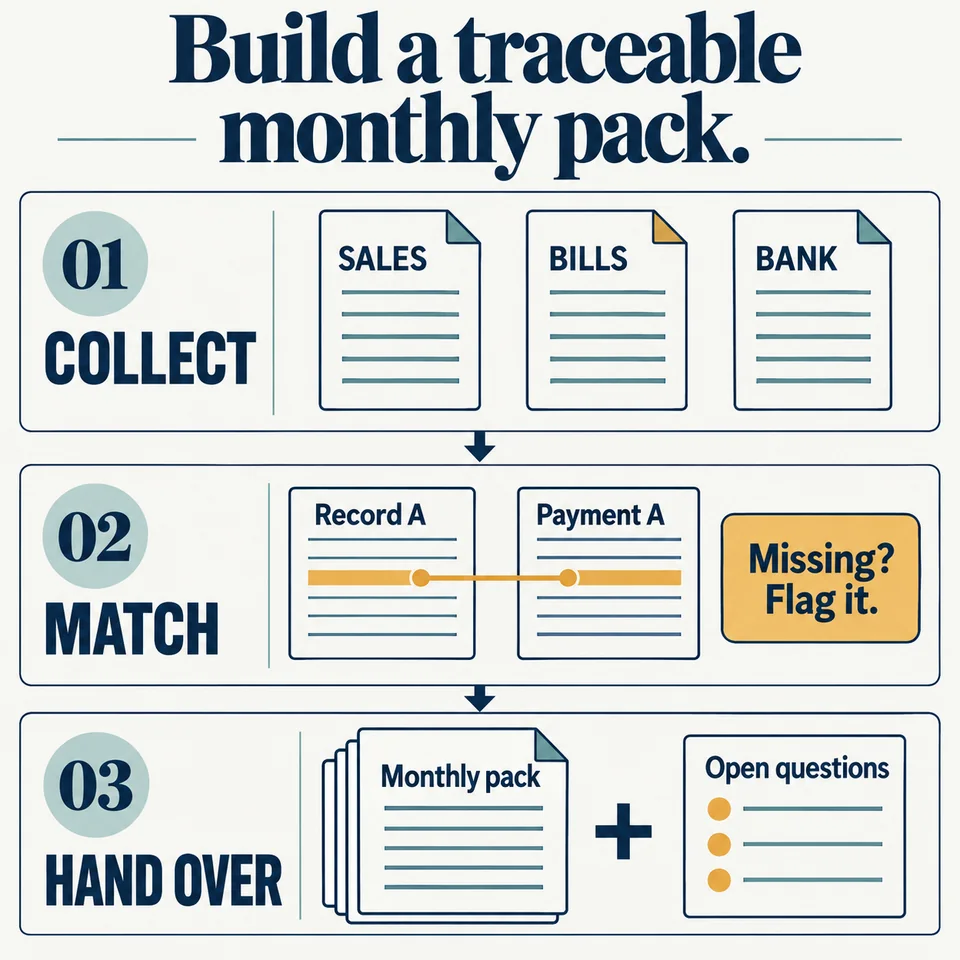
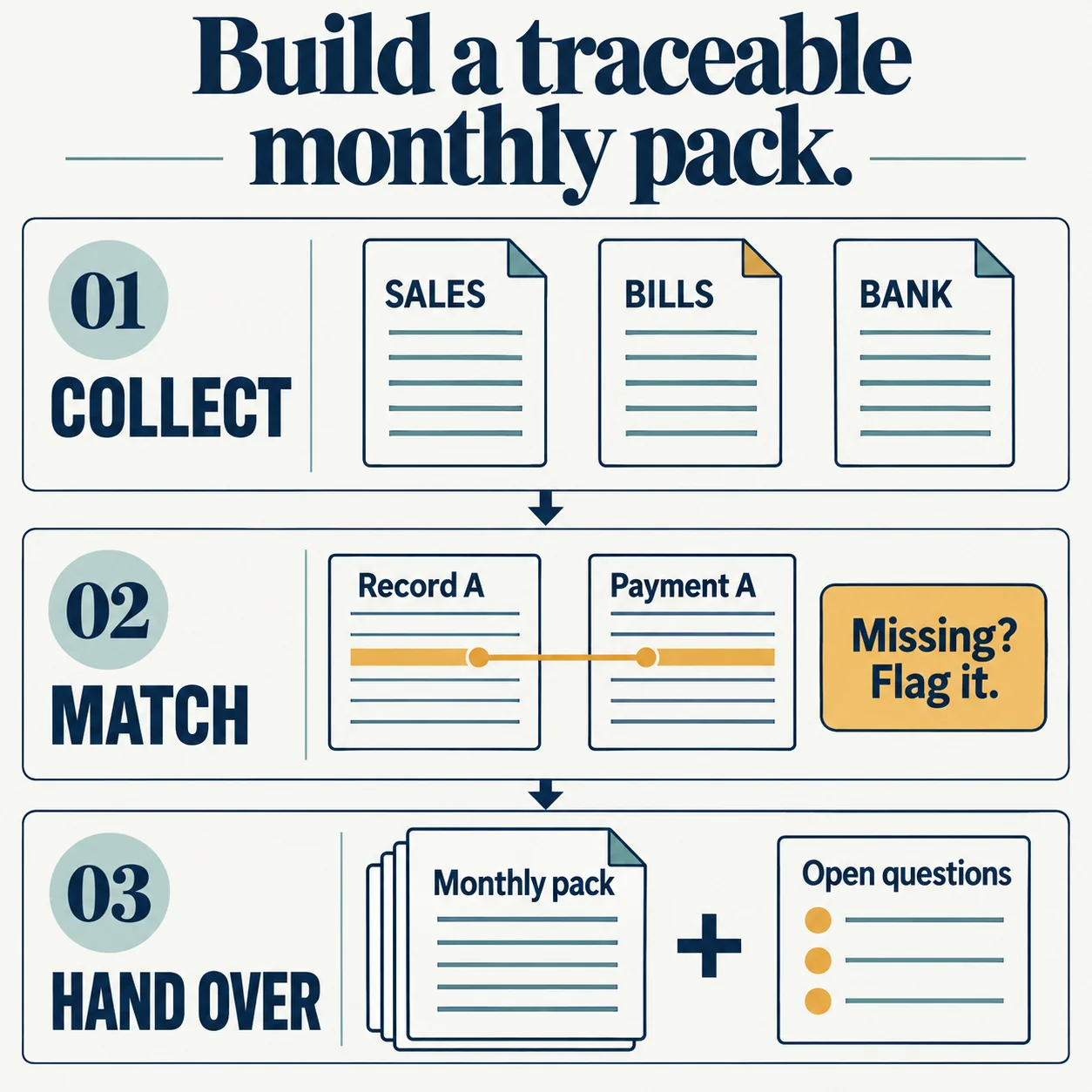
- 1. Collect Gather the sales, purchase, bank and payment records.
- 2. Match Connect each document to its payment and reference.
- 3. Hand over Send the organised pack with its open questions.
For digital businesses, HASiL’s document guidance includes payment-gateway statements, banking records, invoices, purchase records, agreements and supporting receipts. This is a practical monthly handover aid, not a complete tax-filing checklist.
Match the records before you send them
Check that the dates cover the same month. Match sales and purchase records to available payment evidence, and label transfers between your own accounts so they are not mistaken for customer receipts. A bank statement shows money moving; it does not always explain the underlying transaction.
If an amount remains unpaid, keep it in your open-items list. An invoice issued and a payment received are different events. Your reviewer needs both to understand the position.
Keep a short questions list
Use four fields: transaction date, amount, document/reference and question. For example: “12 August; RM240; bank reference ABC; supplier receipt requested.” Mark a missing item clearly instead of inventing an explanation. Attach follow-up documents to the same reference so the issue can be closed once.
Agree the reporting handover
Before the first monthly cycle, agree who collects the records, which system or secure folder to use, the cut-off for the pack and who answers questions. Ask which reports are included and what you should review with them.
Before you hand over the pack
- Label the reporting month and every included business account.
- Attach sales, purchase and payment records with matching references.
- Flag unpaid invoices, refunds, own-account transfers and missing documents.
- Include payment-platform fees and the related bank payout.
- Give each open question a reference and a person to follow up.
- Confirm the recipient and agreed secure handover channel before sharing private records.
What if the records are several months behind?
List the missing months and what exists for each one. Begin with the available bank and sales records, identify gaps, and ask for an assessment of the catch-up work. A realistic completion date depends on the record volume and missing information.
Discuss your bookkeeping records
EGA’s finance and bookkeeping support covers monthly bookkeeping, bank and key-ledger reconciliations, and reporting packs with financial observations. Share your current record setup and the support you need so the scope can be discussed.
Tax, audit and legal opinions are separate unless arranged with an appropriately qualified professional.
Explore EGA’s finance and bookkeeping supportIf you are preparing to approach a bank, the business financing documents checklist shows how your bookkeeping records fit into the application file. For preparation help, see our guide to choosing a business financing consultant.